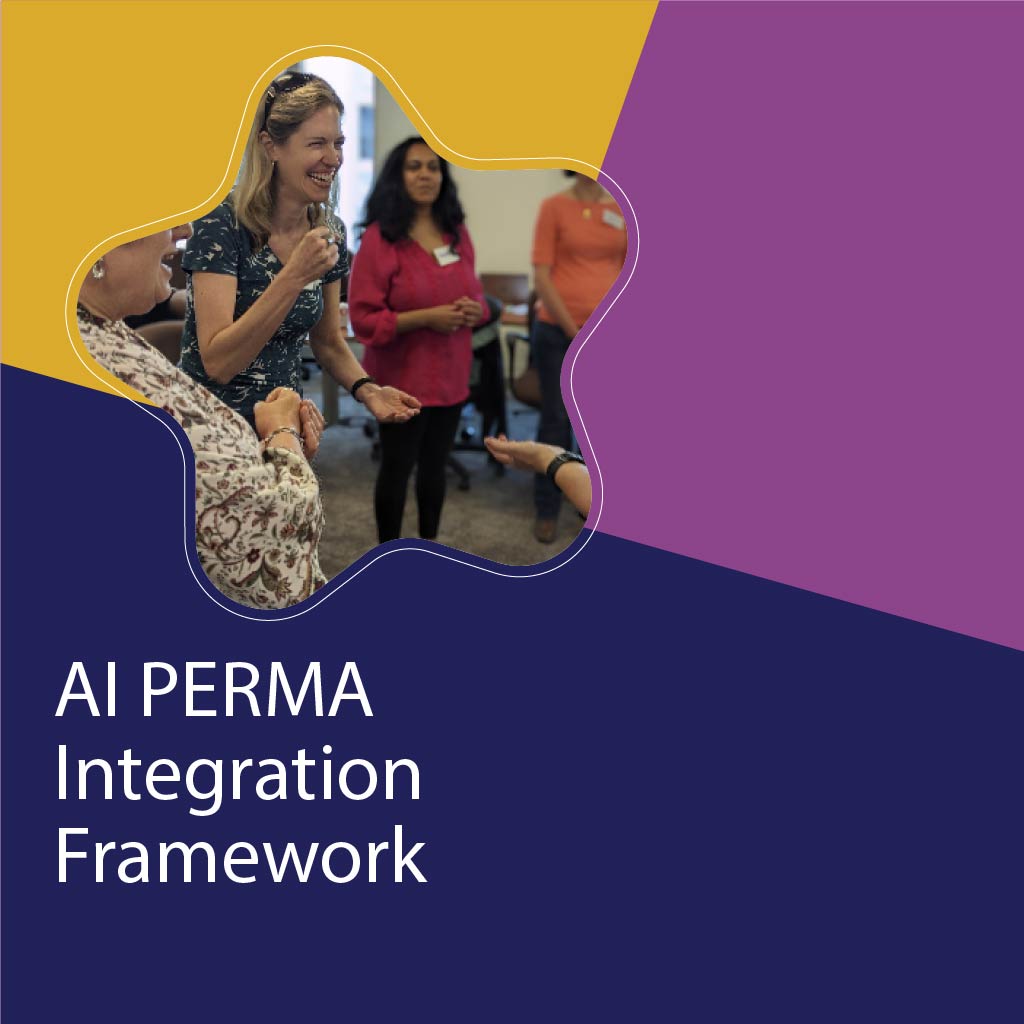
A Human-Centered Approach to AI Adoption
AI is changing how people work, learn, collaborate, and lead.
For many organizations, the question is no longer whether AI will play a role. The question is how to integrate it in ways that strengthen both performance and the human experience of work.
At TRG, we've spent the years helping leaders, teams, and organizations navigate change. As conversations about AI became more frequent, we found ourselves returning to a similar question:
How might AI help create more space for the things that matter most? More meaningful work, stronger relationships, deeper engagement, greater accomplishment, and a clearer connection to purpose. AI should free us to be more human, not less.
The AI-PERMA Integration Framework
The result is our AI-PERMA Integration Framework™, a practical lens for thinking about AI adoption through the science of positive psychology and human flourishing. Grounded in the work of positive psychologist Martin Seligman, the PERMA model identifies five conditions that contribute to individual and organizational flourishing: Positive Emotion, Engagement, Relationships, Meaning, and Achievement.
Rather than focusing solely on efficiency or automation, the framework encourages organizations to consider how AI impacts the human experience of work. It provides a practical lens for evaluating decisions, designing experiences, and creating approaches to AI that support both performance and people.
P | Positive Emotion
Focus Question: How can AI support confidence, curiosity, understanding, and psychological safety?
Positive emotions such as confidence, curiosity, hope, inspiration, and feeling understood create the conditions for people to think more clearly, collaborate more effectively, and perform at their best.
When exploring AI, we encourage organizations to look beyond what technology can do and consider the emotional climate they are trying to create. AI can help reduce unnecessary frustration, confusion, and cognitive overload while creating more space for confidence, learning, and psychological safety.
E | Engagement
Focus Question: How can AI deepen relevance, flow, and meaningful involvement?
Engagement is the experience of being fully present, focused, and connected to what you are doing.
Too often, work and learning experiences prioritize scale and efficiency over relevance. When used intentionally, AI can help create experiences that are more personalized, adaptive, and connected to what matters most to individuals and teams. The goal is not more technology. The goal is greater focus, relevance, and meaningful involvement.
R | Relationships
Focus Question: How can AI create more space for human connection, not less?
Strong relationships are at the heart of effective leadership, collaboration, and team performance. Trust, empathy, communication, and connection remain fundamentally human endeavors.
As work becomes increasingly digital, organizations face a growing challenge: it is becoming easier to transact, but harder to connect. We believe AI should strengthen relationships—not replace them. Its role is to create more space for thoughtful conversations, meaningful interactions, and stronger collaboration.
M | Meaning
Focus Question: How can AI return you to the work that matters most?
Meaning comes from feeling connected to something larger than yourself, such as a mission, purpose, cause, or contribution that matters.
Many leaders and professionals find themselves spending increasing amounts of time on administrative and operational demands that pull them away from the work they find most meaningful. Used thoughtfully, AI can help reduce that burden and create more room for strategic thinking, leadership, creativity, and impact.
A | Achievement
Focus Question: How can AI expand what your team is capable of accomplishing?
Achievement reflects the deeply human desire to grow, improve, accomplish meaningful goals, and see the results of our efforts.
When integrated intentionally, AI can help individuals and teams expand what is possible. It can increase capacity, unlock new approaches, and create opportunities to pursue goals that once felt out of reach. The objective is not simply to do more. It is to accomplish work that creates greater value and impact.
Want Results?
If you want AI to be successfully implemented in your organization, focus first on alignment between technology, people, and performance. Remember: AI should free us to be more human, not less.
We’re curious: How is your organization currently thinking about the role of AI in leadership and learning?